Broken Tooth vs Chipped Tooth in Children: What’s the Difference?
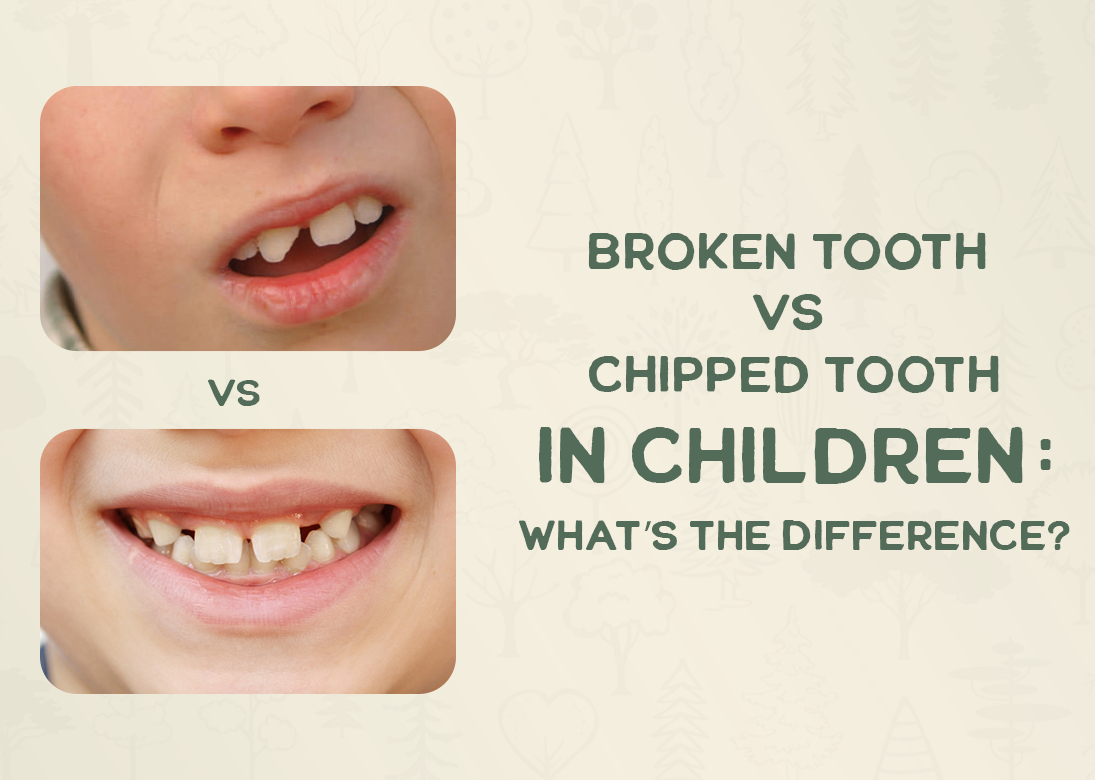
Broken teeth are common in children due to their multiple outdoor activities, and so are chipped teeth. However, there are significant differences between the two, and they require timely pediatric dental assistance. A chipped tooth is usually a minor enamel loss, while a broken tooth indicates a fracture that may involve extensive restorative treatment.
Parents need to know these distinctions to provide immediate first aid and the long-term plan to protect chewing function, aesthetics, and the space for future permanent teeth. Therefore, both broken tooth and chipped tooth repair require prompt dental evaluation, as these issues can lead to severe pain or swelling.
Chipped vs Broken Teeth: The Basic Difference
As stated earlier, both chipped and broken teeth have significant symptoms and treatment differences.
Chipped Tooth
A chipped tooth is one where a small piece of enamel wears off, typically along the edge or corner. Your kid might experience a sharp pain initially that can often be managed by quick home remedies and over-the-counter medications. In addition, this dental issue is usually cosmetic rather than structural and usually affects baby teeth as they are softer and thinner than permanent teeth.
Broken Tooth
This pediatric dental issue is a larger crack or fracture that may involve enamel, dentin, and potentially the pulp. A broken tooth in children can often be serious due to its sensitivity and increased pain symptoms. Therefore, a broken tooth replacement requires immediate attention as it may affect the permanent tooth development in the future.
Common Causes of Chipped and Broken Teeth in Children
The following are a few common causes of chipped or broken teeth in children:
- Accidents commonly result in broken teeth due to high fall pressure. In children, an everyday playground can be a common source.
- Biting hard objects or foods results in a chipped tooth. These often include ice, hard candy, popcorn kernels, etc.
- Falls and collisions in children, too, are common causes of broken or chipped teeth.
- Trauma to the face or jaw during any severe accident.
Recommended Immediate Steps for Broken and Chipped Teeth in Children
Both a broken or chipped tooth requires immediate intervention. Therefore, the following are a few steps that parents can take before consulting a specialized pediatric dentist.
Save Any Loose Fragments
If a piece of tooth breaks off, collect it and rinse gently with water, and store it in a clean container to show the pediatric dentist. A chipped tooth crown treatment can assist later and save your child from complex restorative dental procedures.
Rinse the Mouth with Warm Water
Rinsing a broken or chipped tooth is a common practice that most parents are aware of. This technique, with the application of a cold compress to the cheek or lip, helps reduce swelling or bruising.
Age Appropriate Pain Relievers
For a chipped tooth repair treatment at home, you can go for age-appropriate pain relievers for your child. Moreover, you can consult your pediatric dentist for medication and to avoid placing any harsh substances directly on the tooth.
Immediate Dental Evaluation
Whether it is a broken tooth or a chipped one, an immediate pediatric dental evaluation is a must. Parents must not ignore it, as delay might lead to serious dental complications, which may further require extensive treatments.
Broken Tooth vs Chipped Tooth: Common Treatment Options
Specialized pediatric dentists usually suggest the following treatment options for a broken or chipped tooth, depending on the severity of the case.
Minor Chips
Minor chips are easiest to manage by simply smoothing out the edge, or applying dental bonding material can restore shape. In addition, it further prevents snagging on the tongue or cheek.
Moderate Chips
A chipped tooth crown treatment might be necessary for moderate chipping. Additionally, pediatric dental fillings can also rebuild the tooth’s contour and protect the exposed dentin. These are typically quick, with minimal tooth preparation.
Significant Breaks
On how to fix a broken tooth, specialized pediatric dentists usually opt for pulpotomy treatments. However, some cases may also require the extraction of baby teeth.
Severe Dental Fractures
Severe tooth damages require treatments like root canal therapy. Furthermore, a broken tooth replacement might require extraction for proper restoration, space maintenance, and the use of implants.
Tips for Prevention and Long-Term Care
The following are a few prevention tips for broken or chipped tooth situations. Parents must consider them for their child’s oral health.
- If your child has undergone a chipped tooth crown treatment, it is recommended that they use mouthguards during sports and physical activities. This will help reduce the risk of any further injury to the front teeth.
- Children must avoid biting or chewing on hard objects as this may lead to enamel chips or fractures.
- On how to fix a broken tooth, parents must try to maintain good dental hygiene after the treatment.
- Regular pediatric dental check-ups must not be ignored as they help in identifying underlying decay or weakness to prevent tooth breakage.
- Discuss with the pediatric dentist about space maintenance plans if a primary tooth is extracted due to severe damage, ensuring proper alignment for when permanent teeth emerge.
In The End
By evaluating differences between a chipped tooth and a broken tooth in children, one can understand the extent of damage and make the right treatment choice. Parents must know that from a minor enamel loss to a deeper fracture, your child may require a dentin or pulp, depending on the severity. Therefore, early assessment and appropriate restoration help preserve function, aesthetics, and long-term dental health.
Why Choose Kids Camp and CO. Pediatric Dentistry?
Kids Camp and Co. Pediatric Dentistry, with its comprehensive pediatric dental treatment options, ensures each child’s oral health is well maintained. We understand parental concerns and provide tailored treatments to each child in a comfortable and camp-friendly environment. We aim to make dental visits less distressing for young children.
Frequently Asked Questions (FAQs)
Q1. What should I do immediately if my child chips or breaks a tooth?
Rinse the mouth with warm water, apply a cold compress to lessen the swelling, and save any fragments in milk or water for potential reattachment. Use gauze for bleeding and offer age-appropriate pain relief, but avoid aspirin in young children. In addition, contact a pediatric dentist right away, especially for breaks with pain or looseness.
Q2. Is a chipped or broken baby tooth an emergency?
Not always for small chips without pain. However, swelling occurs that could harm developing permanent teeth. Breaks exposing pulp need urgent pulp protection to prevent infection.
Q3. Can a chipped baby tooth be repaired, or does it heal on its own?
Yes, dentists often smooth edges, apply bonding, or monitor minor chips without invasive treatment. However, a baby tooth may need to be restored to function until it falls out naturally. Severe cases may need crowns to maintain space for permanent teeth.
Q4. How do I know if my child’s chipped tooth needs urgent treatment?
Seek prompt dental care if the chipped tooth causes severe pain, bleeding, swelling, sensitivity that does not improve, or exposes a deeper yellow or red area of the tooth. A pediatric dentist can check whether the damage involves the dentin or pulp.
Q5. What happens if a broken baby tooth cannot be repaired?
If a broken baby tooth is too damaged to restore, the pediatric dentist may recommend extraction. Depending on your child’s age and tooth position, a space maintainer may be considered to help preserve room for the permanent tooth.
.jpg)